ncds portal
Non-Communicable Diseases (NCDs): A Growing Global Challenge
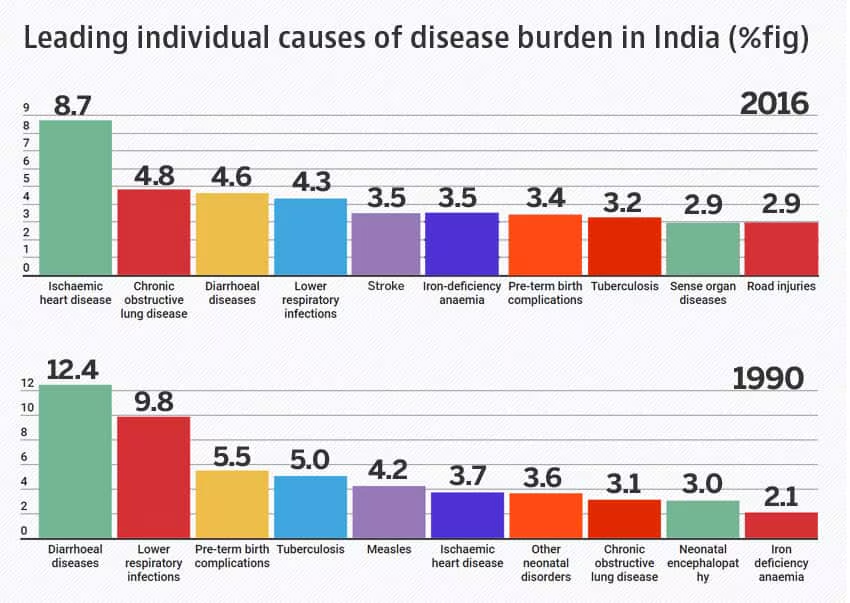
Non-communicable diseases (NCDs) such as diabetes, hypertension, cancer, and cardiovascular disorders are emerging as one of the leading causes of death worldwide. In India, they account for more than 60% of total deaths every year, posing a huge challenge to the public healthcare system. To address this issue, the Government of India has introduced several digital health initiatives, one of which is the NCDS Portal. This online platform helps in collecting, managing, and analyzing data related to NCDs, while also improving healthcare delivery across the country.
The ncds portal acts as a centralized digital solution to track patients, monitor disease prevalence, and ensure effective follow-ups. It plays a crucial role in connecting healthcare workers, doctors, and policymakers, ultimately strengthening India’s fight against lifestyle-related diseases.
What is the NCDS Portal?
The NCDS Portal is an online system developed by the Ministry of Health and Family Welfare (MoHFW) to support the National Programme for Prevention and Control of Cancer, Diabetes, Cardiovascular Diseases, and Stroke (NPCDCS).
- It acts as a data management tool for screening and monitoring patients.
- Helps in maintaining electronic health records.
- Allows easy follow-ups by healthcare providers.
- Provides accurate information for government policy planning.
By creating a digital ecosystem, the portal ensures that no patient goes unnoticed and every diagnosis is tracked for better outcomes.
Objectives of the NCDS Portal
The main objectives of the portal are:
- Early Detection – To identify NCDs at an early stage through screenings.
- Data Collection – To build a nationwide health database for analysis.
- Accessibility – To make health services more accessible in rural and urban areas.
- Monitoring & Evaluation – To keep track of patients’ conditions and treatments.
- Policy Support – To help government agencies draft accurate healthcare policies.
Key Features of the Portal
- Patient Registration: Individuals can be registered at Health and Wellness Centres (HWCs) and tracked over time.
- Follow-up Mechanism: Patients with NCDs can receive reminders for regular check-ups.
- Screening Reports: Data on blood pressure, sugar levels, BMI, and other health indicators is stored.
- Health Worker Integration: ANMs, ASHAs, and doctors can use the system for quick reporting.
- Digital Records: Creates long-term electronic records accessible at multiple health facilities.
Benefits of Using the NCDS Portal
- Improved Patient Care: Doctors can access past records instantly.
- Better Disease Control: Helps monitor trends and spread of NCDs in different regions.
- Reduced Paperwork: Eliminates manual registers at health centres.
- Policy Making: Real-time data helps the government identify hotspots of NCDs.
- Accessibility: Even remote rural areas get connected to central health databases.
How the Portal Supports India’s Healthcare Vision
The NCDS portal is aligned with India’s Ayushman Bharat Digital Health Mission (ABDM). By linking health records with ABHA IDs, patients can have a unique identity across different hospitals and states. This ensures seamless healthcare access and reduces duplication of data.
It also integrates with the Health and Wellness Centres (HWCs), where frontline workers conduct screenings and update patient data directly into the portal. Over time, this builds a reliable national database for non-communicable diseases.
Challenges in Implementation
Despite its importance, the NCDS Portal faces some challenges:
- Lack of internet access in rural areas.
- Need for regular training of health workers.
- Data privacy and security concerns.
- Awareness among the general population is still low.
Conclusion
The ncds portal has emerged as a powerful tool in India’s fight against non-communicable diseases. It ensures early detection, better patient monitoring, and data-driven decision-making. With continuous improvements and stronger digital infrastructure, the portal can significantly reduce the burden of NCDs in India. Going forward, integrating advanced technologies like AI and machine learning can make it even more effective.